
Dr. Irgang
Dr. Lisa Irgang is a Clinical Psychologist and the Owner of Relationship Solutions Center. She provides a variety of services to meet her clients needs. Dr. Lisa has worked with people throughout Chicagoland, helping with adjusting to significant life changes, ADHD, Alternative Sexualities, Anxiety Disorders, Bipolar Disorder, Dealing with Chronic Illness, Depression, Low self-esteem, Parenting special needs children, Relationship concerns, and Trauma. She's a graduate of Argosy University Chicago and a Fellow at CLII - Collaborative Law Institute of Illinois.
June-Pride-Month-flag

History of GLBTQ+ Acceptance

It’s Pride Month 2022, and for my first article this year, I thought it would be helpful to share some history around sexual attraction and activism.

You might be aware that same-sex relationships have been acknowledged as far back as ancient Rome and Greece, but did you know there are sculptures dating back to the 100th century BCE?  And…there are also intersex images in the 70th century BCE?

Most of the research I found focused on male sexual relationships, though there were minor references to lesbian relationships between women beginning in ancient Greece.  This makes sense given most history is written or created by men. 

Ancient times

While references to same-sex relationships between men dates to the 100th century BCE,  evidence of punishment did not appear until the 15th century BCE. Same-sex acts and relationships between men remained unacceptable until the beginning in the 7th century BCE.

What is clear throughout ancient times, is the waxing and waning of acceptance to persecution of same-sex love.  This continued into the common era and around the globe.  For example, the Arab world appears to have viewed same-sex relations between women as necessary to alleviate “heat” in the labia.  Additionally, prior to the Tang dynasty (618 – 907 CE) in China, male sex-same relationships were common.  Furthermore, in 750 CE, a famous Muslim poet wrote homoerotic verse that was accepted and praised. 

The impact of the Bible on views of homosexuality began in the 6th century, with the writing of the Book of Leviticus.   Within Leviticus, there were verses specifically stating same-sex love and sexual behavior is a sin deserving of death (“If a man lies with a male as with a woman, both of them have committed an abomination; they shall be put to death; their blood is upon them.”  18:22).

As the influence of the western world, and the bible, began to spread, we see many territories implementing diverse types of punishment.   The first European law written to criminalize sodomy occurred in 654 CE.  During the Assyrian and Median Empire, Middle Eastern countries practiced castration.  Interestingly, it is not until 1260 CE that persecution of women began to be documented.

Modern Times

The waxing and waning has not stopped in modern times.  The 17th and 18th centuries had many important dates again demonstrating both the criminalization to the acceptance. 

  • For example, in 1688 Japan had its first open gay bar.
  • Then, in 1781, Norway imprisoned transmale, Jens Andersson.
  • France was the first to decriminalize same-sex acts in 1791.
  • And by 1795, Monaco, Prussia, Luxembourg, and Belgium joined France in decriminalization off gay and lesbian behavior and relationships.

While I have focused on same-sex attraction so far, it is important to note that bisexuality has also been well documented, as had gender non-conformity.

In Japan men had same-sex relationships, but also married and created and provided for families with a wife and children.  Gender nonconforming (GNC) individuals were widely accepted in the Aztec, Mayan, Quechua, Moches, Zapotec, and Tupinamba communities.

book cover about Kathoey ladyboys in Thailand

Thailand acknowledges three genders, with kathoey or “ladyboys” being their third.  Thailand is the only country or territory that has never had laws against same-sex relationships.

With respect to acceptance, the Indigenous peoples of the Americas, widely accepted homosexual, bisexual, and gender nonconforming (GNC) individuals.

America

Let’s jump to history in America. 

In early modern times across America and Europe cross-dressing became common for women in as an avenue to better paying jobs, opportunities, and the ability to fight for their country.  These women were not always transgender, though there is enough historical evidence to argue this was the case for some percentage of both female and male cross-dressers.

There were several attempts to create laws against same-sex acts, though they did not pass.  The first women to be persecuted were Sarah White Norman and Mary Vincent Hammon in 1649.  They were found to be guilty of “lewd behavior upon a bed.” 


Sarah White Norman and Mary Vincent Hammon

were not only the first but

were the only women to be prosecuted in United States History.


Over the next three centuries, women often developed strong emotional relationships with each other.  This was seen as acceptable because they also married men and maintained a sexual relationship with their husbands.  At times, women did live together and without the support of a man.  In my lifetime, women who lived together have been called “old maids,” which implies they were unwanted by men.  It pleases me now to read about the normalcy of these relationships.  It shifts the image of “old maids” being forced to live together for financial reasons, to women choosing to be together for love.

Studying Sexual Behavior

In the 1920s and 1930s, we begin to see medical doctors speaking out more about sex and sexuality.  The belief being that because they studied the body, medical doctors should also have expertise on sexual activities.  Freudian psychiatrists eventually took over as “experts” and homosexuality became viewed as maladaptive.  Both the American Social Hygiene Association (ASHA) and the Committee for Research in the Problems in Sex (CRPS) were formed in the 1920s.  ASHA focused on teaching about sexually transmitted diseases and the dangers of masturbation.  While CRPS funded research by psychologists to study sexuality, attitudes, and behaviors.

Early studies were often incomplete or relied only on questionnaires.  

Dr. Albert Kinsey

Then, in 1938, Albert Kinsey, Ph.D. was offered to lead a new opportunity in a new field of study.  The man who was to become the “father of the sexual revolution” headed and helped teach a multi-disciplinary course on marriage at the University of Indiana.  In the classes on marriage, professors were allowed to talk about sex and provide positive information.  Ten years after starting his work in the field of sex research, Kinsey published his famous reports on sexual behavior in both men (1948) and women (1953).  He also developed the Heterosexual – Homosexual Rating Scale (a.k.a. The Kinsey Scale) and professed sexual attraction to be fluid.

The Kinsey Reports - sexual behavior in the human male and sexual behavior in the human female

Despite Kinsey’s research, when the first Diagnostic and Statistical Manual’s (DSM) was published in 1952, homosexuality was included as a mental disorder. 

Prewar same-sex love was able to flourish in some cities, particularly in Harlem and Greenwich Village.  The entertainment industry has always been a place where same-sex love and interest has been safer to explore and express.  Listen to blues music, remember “drag shows” throughout time, and see it openly expressed in theatre and clubs.

During World War II, some members of the GLBT community thrived in the U.S. military.  They found community and a way to bond and explore together.  It was not lost on all, though, that at the same time, Nazi’s were persecuting homosexuals, and anyone identified as homosexual was sent to concentration camps.  At the same time, the United States, led by Senator Joseph McCarthy, began investigation into homosexual behavior in government jobs, including the military.  President Eisenhower signed an Executive Order banning gay men and lesbian women from serving in the military.  Rather than prosecuting sodomy, the military prosecuted homosexuals because homosexuality was in the DSM.  If found out, they were “blue carded,” meaning discharge without veteran benefits, and sent to mental institutions.

Activism

The vulnerability of the gay population, at the same time the civil rights movement was ramping up, lead to the formation of various activist organizations, including Mattachine Society, One Inc., and Daughters of Bilitis.

Lesbianism became further politicized in the 1960s to fight sexism and the compulsory, and assumed superiority of, heterosexism.  The hope was that women would band together against the oppression of heterosexuality and men.  This hope was not realized as various lesbian groups had different agendas.

In the 50s and 60s, the GLBT community was at risk for psychiatric lockup as well as jail time, losing jobs and/or child custody.  When activist groups became successful in lobbying for the removal of homosexuality as a mental health disorder in 1970, the 3rd edition of the DSM, the risk of lock up decrease though the GLBT community was still considered abnormal by the general population and often the courts.

Most of you have heard of the Stonewall Riots of 1969.  The riots were a series of demonstrations in response to police violence when raiding the Stonewall Inn.  According to Wikipedia, the Stonewall Riots “are widely considered to constitute the single most important event leading to the gay liberation movement in the US, and one of the most important events in the modern fight for LGBT rights in the United States.”

Parents and Friends of Lesbians and Gays (PFLAG), formed in 1972, offered family members greater support roles in the gay rights movement. The first march on Washington for gay rights was held in 1979.

Setbacks

The global LGBT rights movement suffered a setback during the 1980s, as the gay male community was decimated by the AIDS epidemic.  Activist groups continued to demand compassion and medical funding.  Enormous marches on Washington drew as many as one million gay rights supporters in 1987 and again in 1993.

Additionally, 1993 saw President Bill Clinton signed a law directing military personnel “don’t ask, don’t tell, don’t pursue, and don’t harass.”  Don’t Ask, Don’t Tell (DWDT) theoretically lifted the ban put in place by President Eisenhower.  While DWDT was supposed to make serving in the military safer for the GLBT community, eight years after it was signed, 12,000 officers had been discharged because they no longer wanted to hide their sexual orientation.

Memorial at Pulse dance club in Orlando

Six years ago today, June 12, 2016, there was a mass shooting in Orlando at the gay dance club Pulse.  With at least 49 dead and another 50 injured, this hate crime is being called the worst mass shooting in U.S. history. 

It occurred during what was Pride week for many towns and cities around the world.

Activism Back on the Rise

Over the past 25 years, we have seen significant forward movement, not only in public acceptance, but in laws protecting GLBT rights.

Ellen DeGeneres

Some significant dates include April 1997 when Ellen DeGeneres came out on national TV.  As mentioned earlier, it was well known the GLBT community flourished in the entertainment industry, but Ellen’s coming out on TV was the first time a celebrity had made such a public declaration.

Same-sex civil unions were first recognized under Vermont law in 2000 and Massachusetts became the first state to perform same-sex marriages in 2004.  Then in June 2020, fittingly, the Supreme Court ruled that sexual orientation and gender identity are included under “sex” as a prohibited grounds for termination of employment under the Civil Rights Act of 1964. 

There have been at least 10 additional federal laws enacted to protect GLBT rights including, employment, housing, medical rights, military, prison, sex trafficking, and identity.  Just two months ago, United States Passports now give the option of male, female, or X gender choice by self-determination.  Most states also have laws allowing for transgender individuals to change their gender on birth certificates and other identity papers.

The past 25 years has also seen a shift into more inclusive language around gender identification, gender expression, sexual attraction, and romantic attraction.

Bisexuality

I want to wrap this up with information about bisexuality.  I mentioned at the beginning of this blog there has been evidence of bisexual orientation since the earliest times, but it deserves some special attention given the negative assumptions and stereotypes that still exist, even within the GLBTQIA+ community.
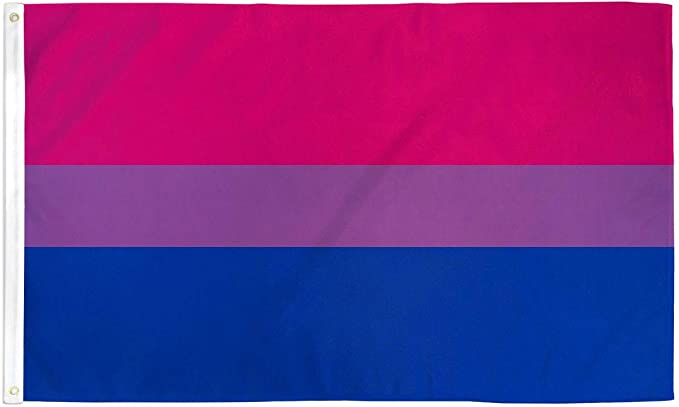
Bisexual Pride Flag

Like many aspects of sexuality, what it means to be bisexual depends on the person.  Historically, bisexual meant romantically and/or sexually attracted to both men and women.  With the newer language we have developed over the past twenty years, some folks might use bisexual synonymously with pansexual (attracted to all genders).  As always, my suggestion would be to ask the person you are speaking with what any sexuality terminology means to them.

Bisexuality has been largely invisible because people typically associate someone’s sexuality with the gender of their partner.  This means, if you identify as female and you are with another female, you will be labeled by others as lesbian.  Attraction to more than one gender is a newer concept for most people and may be confusing the same way being homosexual has been misunderstood throughout history.

I cannot go into depth here, but I wanted to put a few thoughts out for now.  Bisexual people are at higher risk of both physical and mental health problems because of their invisibility.  In my opinion, less attention has been given to bisexuality than to gay men, lesbian women, or transgender folks.  This community needs more attention, compassion, and understanding.  For now, I ask you to challenge your (likely) misperceptions and move away from fetishizing people in the bisexual community.

Thank you for sticking it out with me.  Until next time…

Relationship-Solutions-Center-logo-and-tagline

Sources:

Bullough, V. L. (1998). Alfred Kinsey and the Kinsey Report: Historical Overview and Lasting Contributions. The Journal of Sex Research, 35(2), 127–131. http://www.jstor.org/stable/3813664

https://en.wikipedia.org/wiki/Timeline_of_LGBT_history

https://en.wikipedia.org/wiki/History_of_lesbianism

https://en.wikipedia.org/wiki/History_of_homosexuality

https://www.apa.org/pi/lgbt/resources/history

https://www.glaad.org/blog/us-bisexual-movement-biweek-history-lesson

https://www.nationalww2museum.org/war/articles/gay-and-lesbian-service-members#:~:text=Despite%20the%20threat%20of%20persecution,in%20some%20cases%2C%20first%20loves.

https://www.britannica.com/event/Dont-Ask-Dont-Tell

June-Pride-Month-flag
1 Jun 2022

And welcome to Pride Month

I just want to share a quick note with y’all. With June being Pride Month, several of my posts this month will revolve around LGBTQIAA+ issues, information, and resources.

This is a good time to make sure you subscribe to my blog and be sure to follow me on Facebook.

You can now also find me on Pinterest!

I would love it if you could subscribe and follow me, engage with social media in some way (liking/commenting), and share my posts with your friends and loved ones.

I look forward to seeing y’all on social media!

Relationship-Solutions-Center-logo-and-tagline

It’s easy to subscribe to the blog. Just fill in your email address and click the button below!

Use the social media buttons below to subscribe and follow me on other platforms!

Be-Kind-To-Your-Mind rainbow with Mental Health Matters underneath

Taking Care of Your Mental Health By Taking Prescribed Medications

When I was thinking about what to write for Thursday Thoughts on Mental Illness, I realized how I would be remiss if I did not talk about medication during Mental Health Awareness Month.

When I broach the subject of medication with folks, almost everyone expresses concern. Typically, I hear some combination of the following concerns.

  • You might not consider yourself to be a “medication person,” meaning you also typically avoid basic pain medication including Advil, Aleve, and/or Tylenol.
  • In part, there is a fear of being labeled “crazy.”
  • Finally, is also a fear of dependence.

I don’t like taking medication of any kind.

Taking medication is not something I take lightly. My preference is to work on coping strategies first. We will work together to identify the strategies that could be the most effective for you. These will change depending on the situation and circumstances of the moment. Over the course of therapy, your potential strategies and skills will continue to develop and grow. If I observe the coping strategies are not providing enough relief and/or your symptoms are severe enough to impact daily functioning, I am going to have a conversation with you about the benefits of medication.

Just as medical providers might suggest medication to optimize your physical health, sometimes the most effective treatment for depression is to add medication to your treatment.  My goal is to always help you reach your fullest potential for growth and wellness.

Won’t people think I’m “crazy” if I take medication?

Hopefully not. The reality is, it is more common for people to need antidepressants than to need medication for diabetes or high cholesterol. While many people face situational depression, Major Depression is a serious health issue.

There are five main types of psychotropic medications. They include anti-anxiety medications, antidepressants, stimulants, mood stabilizers, and anti-psychotic medications.

  • Anti-depressants
  • Anti-anxiety
  • Stimulants are typically prescribed if you who have ADHD. Stimulants have also been found to work for some sleep disorders.
  • Mood stabilizers are prescribed if you have experienced an episode of hypomania, mania, or a severe episode of depression.
  • And, Anti-psychotic medications are prescribed if you have been diagnosed with a severe mental illness including schizophrenia, or if you have experienced a psychotic episode in conjunction with your Bipolar Disorder. Anti-psychotics have also been known to help folks with Alzheimer’s.

Interestingly, I have found that when you are vulnerable with others and share you are taking a psychotropic medication, most find people come out of the woodwork and disclose they are also taking a psychotropic medication. You will likely end up comparing medications and your experiences!

What if I don’t like taking medication or am afraid of becoming dependent?

If you have a mental illness, or a mental health condition, you might benefit from psychotropic medication.

While I have not done the additional schooling it would take to become a prescribing psychologist (available in some states, including Illinois), by reviewing your medication(s) with you, I can help you determine if they are working effectively. Over the years, I have seen a sizable portion of folks who do not realize they are not receiving maximum benefit from their medication. This typically occurs because a person might have been experiencing their symptoms for so long that they have not had experienced feeling their best and/or they have forgotten how it feels to be in their best place. In these situations, it often requires trust in me and a willingness to try medication.

Usually, the idea of dependence you are typically thinking about is connected to alcohol or substance use dependence.  In those situations, dependence usually means that the alcohol or substance controls a persons’ life.  They are often thinking about their substance, figuring out ways to get their substance (potentially including stealing from loved ones), or using their substance. 

Yes, there is the matter of your body becoming “addicted” if you mean that your body needs the medication to reach optimal functioning.  Psychotropic medication is effective because it either providers neurotransmitters and/or improves the rate with which they communicate to your brain.  Medication helps “even things out” in a way your brain (specifically, the limbic system) cannot do on your own.  There is a part of your mental health experience that is out of your control.  What is in your control is if you choose to help improve functioning by taking medication.

I hope this helps you understand the use and importance of medication when it comes to managing and improving your mental health.  If you have any thoughts or questions, please feel free to comment below or send me a message.  You can also call 630.912.2908 to schedule an appointment.

Relationship Solutions Center logo and tag line
Teaser page for coparenting communication guidelines

Coparenting can be very stressful. On this ADResolution Tuesday, I want to offer a way you can take care of your mental health when coparenting.

The Association of Family and Conciliation Courts (AFCC) members are judges, lawyers, and mental health professionals dedicated to helping families work together in the best interest of the children.

Coparents working together with school aged children.

They have developed guidelines and best practices you can use when communicating with your coparent.

For example,

  • In providing information to your coparent, make sure to ACT (accurate, complete, timely).
  • If unsure if the other parent is entitled to information then follow the golden rule. Give information that you would like to have in the situation.
  • Be respectful when communication. This means no name calling, no nicknames, and no abusive language.

Comment below or message me to receive a copy of the guidelines.

Part of maintaining positive mental health is nurturing your relationships.

Relationships fulfill our need for connection, including the need of physical touch. Beginning in infancy, we bond with others and learn to trust through positive touch. Swaddling, cradling, and rocking works for infants. For adults, hugs, cuddling, holding hands, and kissing or other intimate touch is a way to show someone matters to you.

For today’s Mental Health Awareness Day tidbit, I’ve put together some ideas for Alphabet Dating. Have you ever tried to work your way through the alphabet? Comment below to let us know some of your favorite alphabet dates!

Alphabet Dating ideas from Relationship Solutions Center

This month, I have spent a lot of time sharing information about the importance of mental health. Well, today is the day!

What day is it?

It’s

Check This Out!

How are you going to take action?

  • Are you going to take a time out?
  • Will you practice deep breathing?
  • Can you remember to say kind words to yourself?
  • Is it time to connect with someone else?
  • Are you going to listen to music intentionally? (Not as background noise.)
  • Will you spend time in nature?
  • Can you make a list of things that are in your control and things that are out of your control?
  • Are there things you can add to your gratitude jar?

No matter what, TODAY is the day YOU, along with 1600 brands, nonprofits, cultural leaders, and government agencies, can TAKE ACTION for YOUR MENTAL HEALTH.

As a bonus, once you take action, shares one (or more) of these GIFs to your social media and let the world know you took action!

Relationship-Solutions-Center-logo-and-tagline
silhouette of family with quote about family

Continuing Mental Health Awareness Month conversation this May 15th

Founded by the United Nations in 1994, May 15th has been designated as International Day of Families.

We have several days throughout the year that are designated to think about and celebrate family. They seem to cluster in the summer. Have you ever noticed that?

  • There’s Mother’s Day on the second Sunday in May.
  • Then Father’s Day on the third Sunday in June.
  • We have Grandparent’s Day on the first Sunday after Labor Day.
  • And even National Aunt’s and Uncle’s Day of July 26th.
  • National Children’s Day is an outlier, celebrated on November 20th

While these are all important, International Family Day is the one set aside to celebrate the family unit. It is the unit of family that forms the foundation of your psychological house.

Who makes up your family?

  • Are they biological?
  • Adopted?
  • Foster?
  • In-laws?
  • Friends?
  • Chosen?

Do you have more than one family? Can your family come together in one place or do you prefer to keep them separate?

Is your family what you hope for or do you wish your relationships were different?

Honoring who you are and where you came from

One of my hobbies is genealogy. This is a natural extension of my curiosity and love of psychology and what makes people who they are. As an adult, I have also developed a deeper appreciation of history, which is of course, also a natural extension of psychology as we study stories of time and people. As I learn more about my genealogy, I often wish I had thought to have my grandmother’s generation tell more stories. It wasn’t really their thing, but now that they are gone, I not only feel the lose of their presence, but the loss of part of my story. I would love to know more about my families’ immigration stories. What was life like for them growing up, but also growing up in other countries and in other cultural atmospheres and other times in history.

In thinking about our stories and family, I think it is important to respect the painful memories and difficult lessons.  Those experiences have helped develop strength and resiliency.  They have taught you valuable lessons.

At the same time, it is also important to pay attention to those good memories.  Too often, we focus on the painful memories and forgot to lean into the positive experiences.

What stories would you like family to know or remember about you? What are some of your favorite memories or quotes?  Memorialize them here with our Relationship Solutions Center family.

Here is one I found and appreciate by Richard Bach.

mental-health-month-2022-screening-Facebook-cover

hijacks Sexuality Sunday

Happy May!  Sunshine and warmer weather are around the corner.  If you are like me, I crave this time of year and it coincides perfectly with Mental Health Awareness Month.  This is a time we are past the cold and rain (hopefully).  Sun is definitely one of the tools in my toolbox.

With mental health discussions becoming more prominent over the past two years, Mental Health America has designated the theme for Mental Health Awareness Month this year as

Back to Basics

We want to make sure you have a solid foundation of basic mental health language and concepts.

The first concept is screening.  Screening means answering a few questions online or an in-person checklist.  If your score is high enough, it will be recommended you follow-up with a mental health professional for further evaluation.

Mental Health America offers many screening tools on their website.  Take a one, two, or a few to get an idea of how you are doing from a mental health perspective. Make this a priority during Mental Health Awareness Month. The sooner the better!

I also have screening tools available depending on what concerns you currently have. Please send me an email with some information or call (630.912.2908) and I will send one to you.