


As a result of being attuned to my body’s needs, I allowed myself the kindness of creating this blog post today rather than yesterday.
For individuals experiencing chronic pain or health issues, collaborating with a psychologist offers considerable benefits. It enables the identification of factors that influence these conditions, aids in comprehending their physical manifestations, and explores strategies for managing pain and enhancing overall well-being.
Additionally, psychologists provide support for processing the emotional upheaval accompanying a chronic health or pain diagnosis, helping individuals navigate its psychological ramifications.

Everyone deserves time for self-care.


Congratulations to Nicole Kay with Dark Rose Press, and the winner of the Metamour Day 2022 Graphic contest!
Special thanks to the National Coalition for Sexual Freedom (NCSF) for running the contest and their continued support of folks who want to express their sexual freedom in multiple ways.
If you are still looking for a card for your metamour, check out NCSF’s page featuring cards made by Anna D. Hirsch of PositivelyPolyAnna.
There are also several great articles explaining metamours and how polyamory can work.
In the past, I have talked about “love banks,” for individuals. We also have love banks for each relationship we are in – from family to friends to coworkers to romantic partners.
Just like a financial bank account, your deposits into the various love banks need to exceed your withdrawals or else you are “in the red” and the account is depleted.
In a relationship, the withdrawals consist of various behaviors, including but not limited:
- Sarcasm
- Ridiculing
- Threatening
- Accusing
- Labeling
- Taunting
- Laughing
- Blaming
- Failures or missed opportunities to meet the other persons’ needs.
When withdrawals happen, it chips away at the relationship, causing disconnection. Eventually, if we continue to withdraw from the love bank without making deposits, the relationship is depleted. It is crucial we make daily deposits into the love bank.
Check out this Relationship Love Bank for some ideas for types of deposits you can make in your relationships.
What are your favorite ways to add deposits into your relationship love banks?


Are you wondering why you should read this blog? Or share it?
I’ll tell you why.
Because Suicide Touches All Communities
In this past year, Nation wide,
- There were 1.4 million attempts and more than 47,000 deaths from suicide.
- Suicide is at its highest level and is still rising.
- Rural counties are being hit the hardest with suicide rates double the rate in urban counties.
- There has been an alarming 50% increase of suicide rates among women.
It’s important to know, everyone can help decrease these numbers. The first step is to know the
Risk Factors
- Mental disorders, particularly mood disorders, schizophrenia, anxiety disorders and certain personality disorders
- Alcohol and other substance use disorders
- Hopelessness
- Impulsive and/or aggressive tendencies
- History of trauma or abuse
- Major physical illnesses
- Previous suicide attempt
- Family history of suicide
- Job or financial loss
- Loss of relationship
- Easy access to lethal means
- Local clusters of suicide
- Lack of social support and sense of isolation
- Stigma associated with asking for help
- Lack of health care, especially mental health and substance abuse treatment
- Cultural and religious beliefs, such as the belief that suicide is a noble resolution of a personal dilemma
- Exposure to others who have died by suicide (in real life or via the media and Internet)
While those who are contemplating suicide don’t always demonstrate warning signs, most do. The
Warning Signs

#BeThe1To be aware of the risks and notice the signs, then
include:
- Talking about wanting to die or to kill themselves.
- Looking for a way to kill themselves, such as searching online or buying a gun.
- Talking about feeling hopeless or having no reason to live.
- Talking about feeling trapped or in unbearable pain.
- Talking about being a burden to others.
- Increasing their use of alcohol or drugs.
- Acting anxious or agitated; behaving recklessly.
- Sleeping too little or too much.
- Withdrawing or isolating themselves.
- Showing rage or talking about seeking revenge.
- Displaying extreme mood swings.
Suicide is preventable.
Thank you for committing to doing your part.
If you are in crisis or having suicidal thoughts, YOU ARE NOT ALONE!
Please call 800.273.8255, 911 or go to your nearest emergency room.

I recently had someone ask why I have been sharing articles about polyamory and kink.
For those who do not know, one of my areas of specialty includes working with folks who fall anywhere in the spectrum of “alternative sexuality.” Sexuality is broken down to include anatomical sex
- anatomical sex
- gender identification (GLBTQIA+)
- gender expression
- sexual orientation
- relationship structures & styles (monogamy or non-monogamy; consensual power exchange)
- sexual attraction
- sexual activities
As you can see, there are several areas of sexuality where a person can identify as “non-traditional” or “alternative.” While a person’s mental health is not considered unhealthy just because they fall somewhere along the alternative spectrum, working with a sensitive and aware psychologist is often a preference as it can play a role in the issues and concerns brought into therapy.
So, I have been posting information to educate all of you, destigmatize alternative sexuality, and address concerns specific to folks in these communities.
While there is not one all-inclusive pride flag, I have found 3 that encapsulate the possibilities in terms of sexuality and I’m including them here. I can explain the meaning of each flag in a separate post if you are interested.
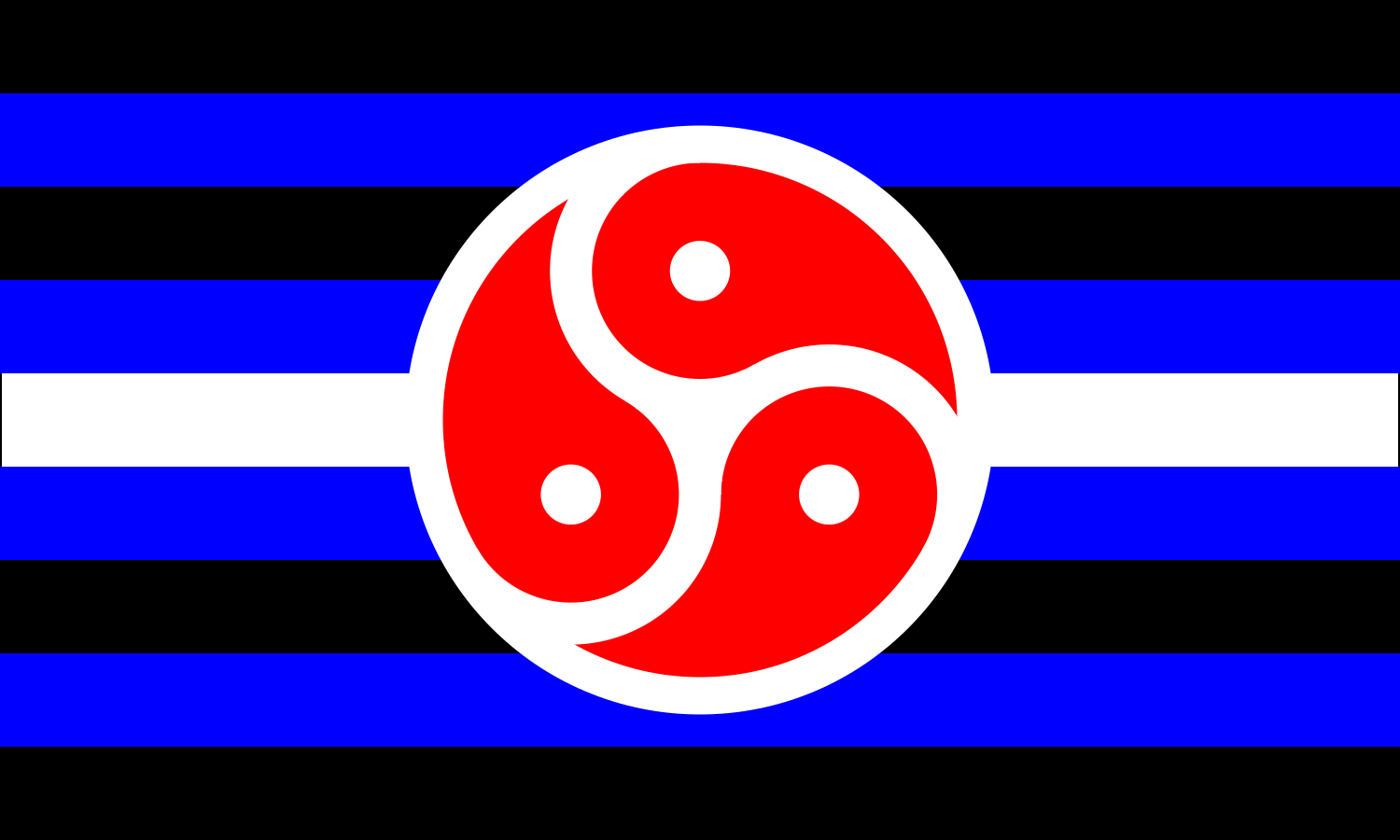
BDSM Pride Flag

Polyamory Pride Flag

While my blogs haven’t been as frequent, I have been posting almost daily to the Relationship Solutions Center, P.C. Facebook page (@RelationshipSolutionsCenter).
Hopefully, you have seen me there. If not, please “follow me” and my posts will show up in your feed. I also invite you to react, share and/or comment.
Here are some highlights:
- In February, there were two daily posts featuring important people for Black History Month
- Regular posts on ADHD
- Frequent posts with important information about healthy relationships
- Numerous posts about Bipolar Disorder
- Posts about suicide prevention, ethical non-monogamy, eating disorders and BDSM/kink
- Shared posts from the American Psychological Association
- Many posts about parenting
- and much, much more….
If there is a topic you would like to hear about, please feel free to comment below and/or send me a message at drirgang@rscil.com.
I hope to “see” you soon!

When filling in your new calendar, start with the fixed, non-negotiable events, including:
· Birthdays/Holidays
· Consistent monthly weekly/monthly meetings
· School calendar (days off, testing dates, etc.)
· Standing volunteer commitments
Then, you can start adding in additional activities.
And, finally, you are ready to add in activity schedules, doctor appointments, time with friends, etc.